Top 5 Estimating Tools Every Electrical Contractor Needs
An electrical contractor can build a technically perfect bid and still lose the job.
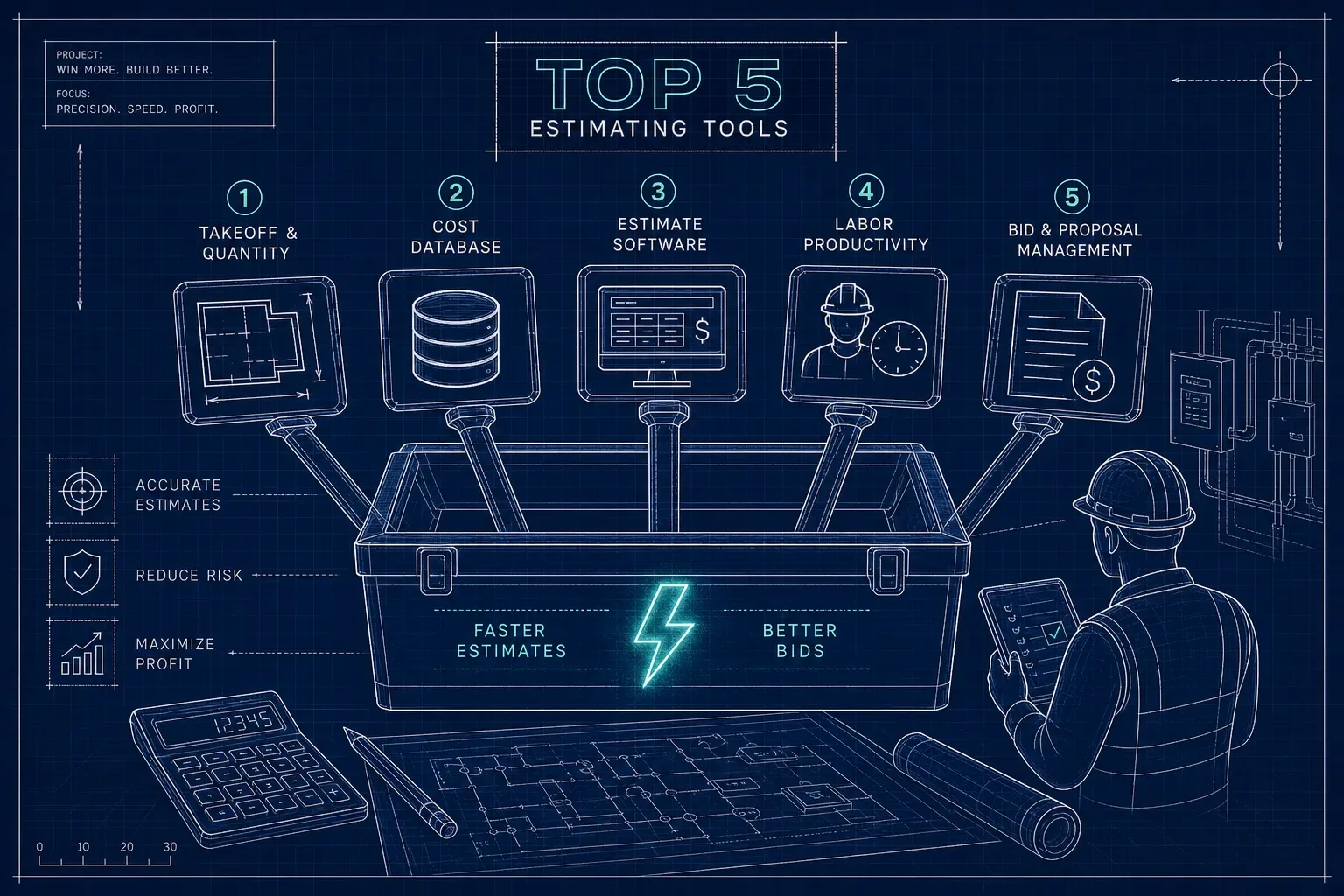
An electrical contractor can build a technically perfect bid and still lose the job. The right electrical contractor estimating software is only part of the equation. The estimate took three days to produce, and the prospect already signed with someone else. The material costs were pulled from last year's pricing, and the margin evaporated on delivery. Or the quote landed in a prospect's inbox on a Tuesday, no one followed up by Thursday, and a competitor who called first got the contract. Those are three separate failure points, and most contractors only ever fix one of them.
This guide covers the right estimating and takeoff tools for your company size and workflow, what each one actually costs in 2026, and how they connect to the field service platforms you're already running. The follow-up problem after a quote is sent is a different animal entirely, and it gets addressed in the final section because that's where most contractors quietly bleed revenue without realizing it.
What to look for before choosing electrical contractor estimating software
Comparing feature lists across a dozen estimating platforms is the wrong place to start. Most tools on the market share the same surface-level capabilities. The real question is whether those capabilities match how your shop actually bids work.
Core features that actually move a bid forward
The non-negotiables for any electrical estimating tool are a built-in labor and material database with U.S. regional pricing, assembly-based takeoff rather than line-item-only entry, and bid package generation. Labor unit databases matter more than most contractors realize because they determine whether your bid reflects how your crew actually works in the field, not how some national average crew works. A database built around productivity rates that don't match your team's real output will put you into jobs at the wrong margin every time. The ability to override or customize those rates is what separates a useful database from a liability.
Matching the tool to your company size and project type
Residential shops doing service calls and small panel upgrades need fast quote-to-invoice flow and a low learning curve. Commercial contractors doing larger projects need assembly management, change order tracking, and job costing depth. Picking enterprise software for a three-person residential shop is just as wrong as using a lightweight quoting app for a $2M commercial bid. Ask three questions before evaluating any platform: What types of jobs do you bid? How many bids do you run per month? Do you have dedicated estimators, or is the owner building quotes between site visits?
Best electrical contractor estimating software for residential and light commercial work
For contractors doing residential service work and smaller commercial jobs, two electrician estimating tools consistently stand out for speed, simplicity, and pricing that fits the revenue range.
TurboBid: built for electrical contractors who bid fast
TurboBid is purpose-built for electrical estimating, which matters because generic contractor tools often treat electrical work as an afterthought. It runs primarily on Windows desktop with cloud access available, and includes built-in material and labor databases, assemblies, bid package generation, and change order tracking. Integrations cover PlanSwift, QuickBooks, Sage, and Procore, which handles the workflow for most small-to-mid shops without requiring additional connectors.
Pricing in 2026 runs $135 per month with a $350 one-time setup fee, or $1,395 as a one-time perpetual license. The monthly subscription includes TurboCloud access for weekly material price updates and software upgrades. If you convert from subscription to purchase, TurboBid refunds the setup fee. Best fit: residential and light commercial contractors who need dedicated electrical contractor estimating software without enterprise complexity or cost.
Esticom (now Procore Estimating): cloud-native for growing teams
Esticom is now part of Procore and has evolved into a cloud-native option for contractors scaling from residential into commercial work. Its core strengths are takeoff tools, live material pricing, and the natural advantage of living inside the Procore ecosystem for teams already using Procore for project management. Browser-based access means estimators aren't tethered to a specific machine. Pricing runs approximately $139 to $219 per user per month depending on the plan and bundle.
The Procore connection is either a significant advantage or a cost consideration depending on your existing stack. If you're already a Procore shop, Esticom is a straightforward add-on. If you're not, you're paying for ecosystem access you may not fully use. Best fit: electrical contractors with 5 to 20 technicians adding commercial project work who need browser-based estimating.
Best electrical contractor estimating software for mid-size to large commercial work
At the commercial level, database depth, assembly management, and the ability to handle complex multi-phase bids matter more than speed or price. These three platforms are where serious commercial electrical estimating happens.
Trimble Accubid: the standard for large commercial electrical bids
Accubid is a go-to for contractors doing significant commercial and industrial electrical work. Its labor productivity databases and advanced assembly management are built for the complexity that comes with large-project estimating, not adapted from a general construction platform. It lives inside the Trimble ecosystem, which means strong connections to other Trimble construction tools but a steeper learning curve if you're coming from lighter software.
Pricing is enterprise quote-based, commonly estimated at $3,000 or more per seat per year. There's no published price list. You demo, you get quoted. That process itself tells you something about who the software is built for. Best fit: commercial electrical contractors with dedicated estimators running complex, multi-trade projects where database depth justifies the cost.
McCormick Systems: desktop depth for complex bids
McCormick has been an electrical estimating standard for decades, and that history shows in its database depth. It runs primarily on Windows desktop and includes over 55,000 database items and 25,000 prebuilt assemblies, with supplier-connected pricing so material costs can reflect your actual distributor rates. Estimators who know McCormick know it well, and that institutional knowledge is a real asset for established shops.
The tradeoff is that integrations are limited compared to newer SaaS tools, and the platform functions more as a standalone estimating engine than a connected operational system. Pricing is license-based and varies considerably by edition, ranging from around $1,500 to over $18,000 depending on scope. Best fit: established commercial contractors with experienced estimators who want full control over their bid data and don't need native field-service connections.
SimPRO: when estimating and field service need to live in one system
SimPRO is the broadest platform on this list. It covers estimating and quoting, job costing, scheduling, and invoicing in a single cloud-based system with mobile apps for field crews. For contractors who are tired of moving data between an estimating tool and a separate field service platform, SimPRO solves that handoff problem natively rather than patching it with exports and imports.
It integrates cleanly with QuickBooks and Xero, which covers the accounting layer for most mid-size shops. The platform requires a real implementation investment upfront, but the payoff is an end-to-end workflow where an approved estimate flows through to job creation, dispatch, and invoicing without anyone re-keying data. Best fit: mid-size electrical contractors doing commercial service and project work who want a single operational platform rather than a stack of integrated tools.
What these tools actually cost: a realistic pricing breakdown
The sticker price is rarely the total cost. Setup fees, training, and annual database update subscriptions change the first-year number significantly, and most contractors don't budget for them until they're already past the purchase decision.
Subscription vs. one-time license: which model fits your cash flow
Cloud and SaaS tools like Esticom and SimPRO run on per-user monthly or annual subscriptions, typically in the $100 to $300 per user per month range for capable plans. Desktop and legacy tools like TurboBid and McCormick still offer perpetual licenses ranging from roughly $1,395 to $3,500 or more as a one-time purchase. Enterprise tools like Accubid are quote-based only.
Neither model is inherently better. Subscriptions keep software current automatically and spread cost over time. Perpetual licenses reduce long-term cost if you plan to stay on the same tool for years and don't need continuous updates. The real question is whether your cash flow favors a lower monthly expense or a one-time hit that's done.
Hidden costs to budget for before you sign
TurboBid's $350 setup fee on the monthly plan is a documented example of a cost that doesn't show up in the headline price. PlanSwift charges separately for web training sessions and annual support renewals. Some desktop tools require annual database update subscriptions to keep material pricing current, adding $200 or more per year on top of the license fee.
For teams adopting a new platform, budget 2 to 4 weeks of slower bidding while estimators get up to speed. That productivity dip is real, and underestimating it is one of the main reasons software rollouts fail in smaller shops where one person handles most of the estimating.
Connecting your estimating software to Jobber or ServiceTitan
For most electrical shops, the estimating tool doesn't stand alone. It needs to talk to the field service management platform where jobs get scheduled, dispatched, and invoiced. That connection is cleaner with some tools than others.
Which tools integrate natively vs. require workarounds
SimPRO has the most complete field-service workflow of the tools on this list, handling the full chain from estimate to invoice inside one platform. ArcSite has a documented native integration with Jobber for smaller shops. For every other estimating tool on this list, including TurboBid, McCormick, and Accubid, the practical path is exporting an accepted quote to QuickBooks and letting that sync trigger the next step in Jobber or ServiceTitan. It works, but it's a process rather than a feature, and it requires discipline to execute consistently.
What a clean quote-to-job handoff actually looks like
The ideal workflow looks like this: an estimate is approved, job details flow to the FSM platform without being re-keyed, the tech gets a work order, and the invoice generates on job completion. The tools that come closest to this end-to-end flow are SimPRO natively and Esticom within the Procore ecosystem. For everyone else, that handoff is a manual step that someone on your team owns, and when no one explicitly owns it, jobs slip through.
What happens after you send the quote (and where most electrical contractors lose revenue)
This is the part of the bidding process that estimating software doesn't cover, and it's where close rates either hold up or fall apart.
The follow-up gap that kills close rates
When a quote goes out, most electrical contractors have no structured system for what happens next. The prospect sits on it, compares competing bids, and the contractor who follows up first usually wins. According to contractor sales research, businesses running systematic follow-up sequences close a significantly higher share of quoted jobs than those sending proposals with no structured outreach, with some estimates putting the difference at nearly 3x. That gap has nothing to do with the quality of the estimate.
The problem is execution. Most shop owners are on a job site when a quote is aging in someone's inbox. Manual follow-up requires office staff, consistent systems, and someone monitoring which quotes are past 48 hours without a response. Most shops under $5M don't have that infrastructure, which means they're building solid estimates and then leaving the close to chance.
How pairing estimating software with Maximus closes that gap automatically
This is where estimating software ends and where Maximus picks up. Maximus is an AI front office platform built specifically for home services and trades businesses, including electrical contractors. Once a quote is sent from your estimating tool, Maximus handles the follow-up: automated check-ins timed to your sales process, flagging stale quotes that need a call, and keeping the conversation moving without you or your office manager manually tracking it. It integrates with Jobber, ServiceTitan, and QuickBooks, so when a prospect says yes, the job moves into your system without anyone re-entering data.
For electrical contractors spending real money on electrical contractor estimating software and real time building competitive bids, losing those bids to poor follow-up is the most fixable revenue leak in the business. The estimating tool gets you to the finish line. The follow-up system is what actually crosses it.
The right tool comes down to your shop, not the software's feature count
If you're a residential contractor doing service work and small jobs, TurboBid or Esticom gives you the electrical estimating capability you need without overcomplicating your workflow. TurboBid at $1,395 one-time is a straightforward decision for a shop that wants dedicated electrical functionality without a monthly commitment. Esticom makes more sense if you're already inside the Procore ecosystem or adding commercial work.
If you're doing commercial work or managing a larger team, Accubid, McCormick, or SimPRO give you the database depth and workflow control your bids require. SimPRO is a strong choice if you want to consolidate estimating and field service into one system. Accubid and McCormick are the right answer if you have dedicated estimators and prioritize bid precision over platform breadth.
Pricing ranges from under $1,500 as a one-time license to $3,000 or more per seat per year for enterprise tools. The right electrical contractor estimating software depends on how many bids you run, how complex they are, and whether your estimating tool needs to live inside a broader operational platform. Once you have the estimating side handled, pairing it with an AI front office platform like Maximus ensures the work you put into building a winning bid actually converts into signed jobs. Reach out to the Maximus team directly to see how it connects to your existing stack.